What Is The Brain Song?
The Brain Song is a digital audio program designed to improve memory, focus and mental clarity by exposing your brain to specific sound frequencies. You download MP3 tracks and listen through headphones for seven minutes per day. The creator claims these frequencies trigger a neurological response that strengthens memory circuits and clears brain fog.
Unlike supplement stacks or memory games that require active participation, this program is passive. You press play, relax, and let the audio do the work. The target audience is adults who feel their memory slipping — forgetting appointments, struggling to recall names, or losing focus mid-conversation — and want something simpler than a 12-step morning routine.
The program comes with a main audio track, bonus materials including sleep optimization guides and relaxation exercises, and lifetime access to updates. Everything is delivered instantly after purchase, so there's no physical product to ship. The creator positions it as a science-backed shortcut to the kind of cognitive function people spend hundreds on brain supplements trying to achieve.
The packaging is minimal because it's entirely digital. Once you complete your purchase, you receive login credentials to a members area where you can stream or download all the audio files. The main track runs exactly seven minutes and three seconds, which the creator says is calibrated to complete one full brainwave entrainment cycle without overstimulating neural pathways.
The bonus sleep tracks range from 20 to 45 minutes and use different frequency combinations targeting delta wave production. The idea is that better sleep quality amplifies the memory benefits from the main track, since deep sleep is when your brain consolidates new information and clears metabolic waste that contributes to brain fog.
How Does The Brain Song Work?
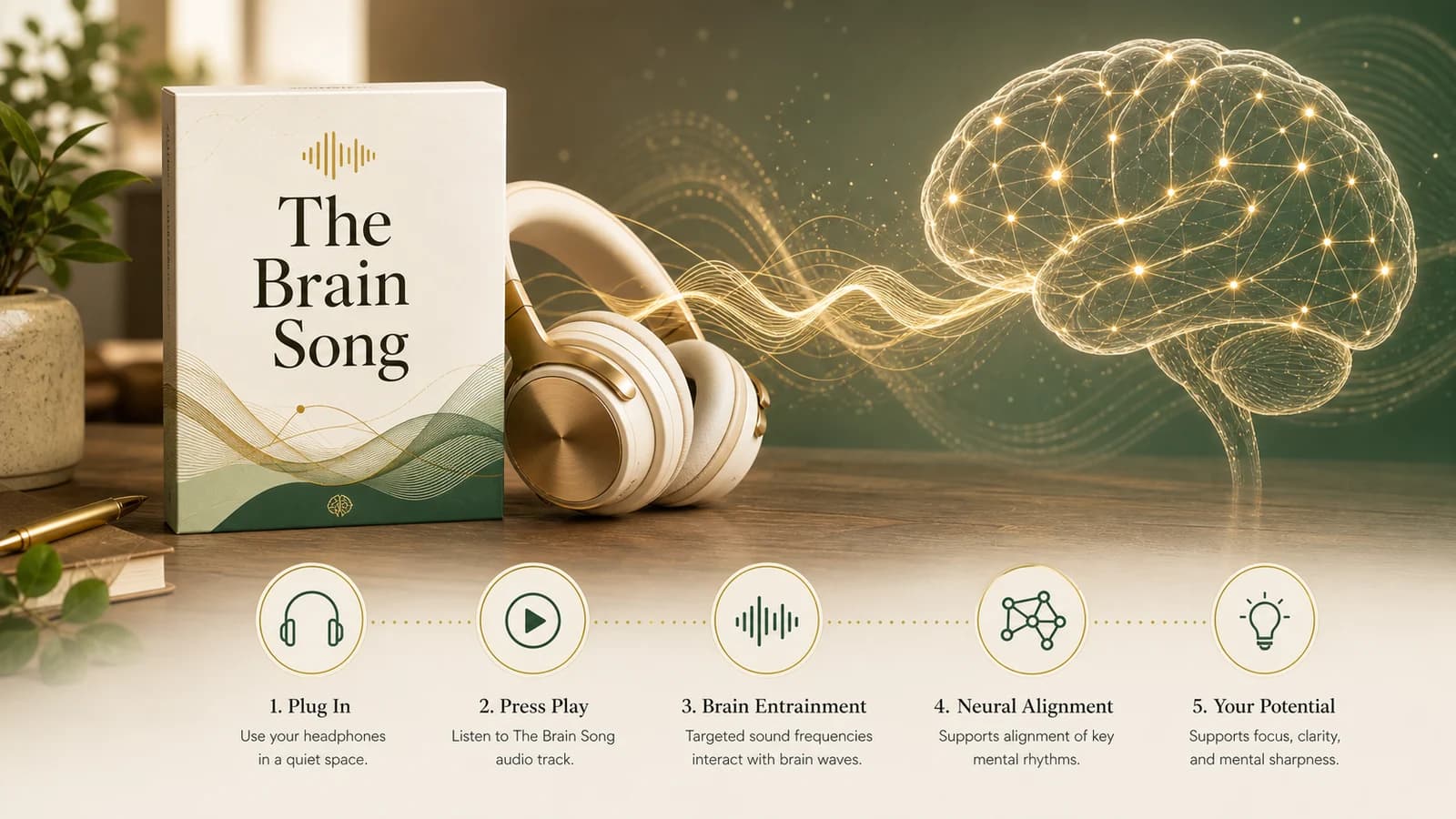
The Brain Song relies on a concept called brainwave entrainment. Your brain operates at different electrical frequencies depending on what you're doing. Delta waves dominate during deep sleep, theta waves appear during meditation, alpha waves show up when you're relaxed but alert, and beta waves drive active thinking. Gamma waves, the fastest frequency, are linked to memory formation and processing.
The audio uses binaural beats and isochronic tones to nudge your brain into specific frequency ranges. When you hear two slightly different tones in each ear, your brain perceives a third tone — the difference between the two — and begins to sync its electrical activity to that frequency. This is the entrainment effect.
The program claims to target gamma and theta frequencies because research shows gamma waves light up during memory encoding, while theta waves help with memory consolidation and retrieval. By training your brain to spend more time in these states, the theory goes, you strengthen the neural pathways responsible for storing and recalling information.
The seven-minute duration is intentional. Studies on brainwave entrainment suggest that exposure windows between five and twenty minutes produce measurable changes in brainwave activity without causing habituation or mental fatigue. The creators recommend daily use for at least 30 days to see compounding benefits.
Here's how the entrainment process unfolds during a typical session. The first 90 seconds use a gentle frequency ramp to ease your brain out of its current state — usually beta if you're alert or alpha if you're relaxed. This prevents the jarring sensation some people report when frequencies shift too abruptly.
Minutes two through five deliver the core gamma stimulation at 40 Hz, which research links to enhanced memory encoding and increased blood flow to the hippocampus. The hippocampus is the brain structure most responsible for forming new memories and retrieving stored ones, so targeting it directly is central to the program's claims.
The final 90 seconds transition you into theta frequencies around 6 Hz. This shift is designed to move freshly encoded information from short-term working memory into longer-term storage. The theta phase also promotes a relaxed state that makes it easier to return to your day without feeling disoriented.
One detail the creator emphasizes in the quick-start guide is consistency over intensity. Listening twice in one day won't double your results, and skipping three days per week will significantly reduce the cumulative effect. The brain adapts to repeated stimulation, which is why daily exposure builds neural patterns that persist even when you're not listening.
The Brain Song Features
Since this is an audio program rather than a supplement, there are no physical ingredients. Instead, here are the core components:
The program also includes a quick-start guide that explains when to listen (morning for focus, evening for consolidation), how to set up your environment, and what to expect during the first 30 days.
The binaural beats are layered over ambient soundscapes — gentle nature sounds, soft white noise, or barely audible music — to make the experience more pleasant. Some brainwave entrainment programs use raw sine waves that sound harsh or mechanical, which can make daily listening feel like a chore. The Brain Song's production quality is higher than average for this category, with smooth transitions and no jarring volume spikes.
The isochronic tones provide a backup entrainment method for people whose brains don't respond strongly to binaural beats alone. Some users report better results when both methods are combined, while others find one technique works better than the other. The program uses both throughout the seven-minute session to maximize responsiveness across different listener profiles.
The bonus materials include a PDF guide on sleep hygiene basics — room temperature recommendations, light exposure timing, caffeine cutoff windows — and a second audio track specifically for deep sleep. The sleep track runs 30 minutes and uses delta wave frequencies between 1 and 4 Hz. Multiple buyers mentioned this bonus track in reviews, saying it helped them fall asleep faster and wake up feeling less groggy.
Binaural Beats
Two different frequencies played in each ear to create a perceived third tone that entrains brainwaves.
Isochronic Tones
Pulses of sound at regular intervals that don't require headphones but work best with them.
Gamma Wave Targeting
Frequencies in the 40 Hz range linked to memory encoding and cognitive processing.
Theta Wave Activation
Frequencies between 4-8 Hz associated with deep relaxation and memory consolidation.
7-Minute Daily Protocol
Short enough to fit into any routine, long enough to produce measurable brainwave shifts.
Bonus Sleep Tracks
Additional audio files designed to improve sleep quality, which indirectly supports memory.
Lifetime Access
One-time purchase with no recurring fees or upsells for core content.
The Brain Song Pros And Cons
✓ Pros
- ✓Takes only seven minutes per day with zero preparation or cleanup
- ✓Non-invasive option for people who can't or won't take nootropic supplements
- ✓One-time payment with lifetime access and no subscription traps
- ✓Based on decades of brainwave entrainment research showing real EEG changes
- ✓Comes with a 60-day money-back guarantee so you can test risk-free
- ✓No side effects reported in buyer feedback or clinical literature on binaural beats
- ✓Works alongside other brain health habits like exercise, sleep and diet
- ✓Audio quality is noticeably better than many competing entrainment programs
- ✓Bonus sleep track adds value beyond the core memory benefit
- ✓Compatible with any device that plays MP3 files, no special apps required
✗ Cons
- ✗Results vary widely — some users notice changes within two weeks, others see nothing after 60 days
- ✗Requires consistent daily use, which some people find difficult to maintain
- ✗Not a replacement for medical treatment if you have diagnosed cognitive decline
- ✗Limited independent research on this exact formula versus general brainwave studies
- ✗Digital-only format may disappoint people who prefer physical products or face-to-face coaching
- ✗Sales page uses aggressive marketing language that sets unrealistic speed expectations
- ✗No mobile app or streaming platform integration, just raw MP3 downloads
- ✗Some users report feeling drowsy immediately after the theta phase, which can interfere with morning routines
Ready to try The Brain Song?
Get The Brain Song →* Affiliate link. We earn a small commission at no extra cost to you.
The Brain Song Pricing / Where To Buy
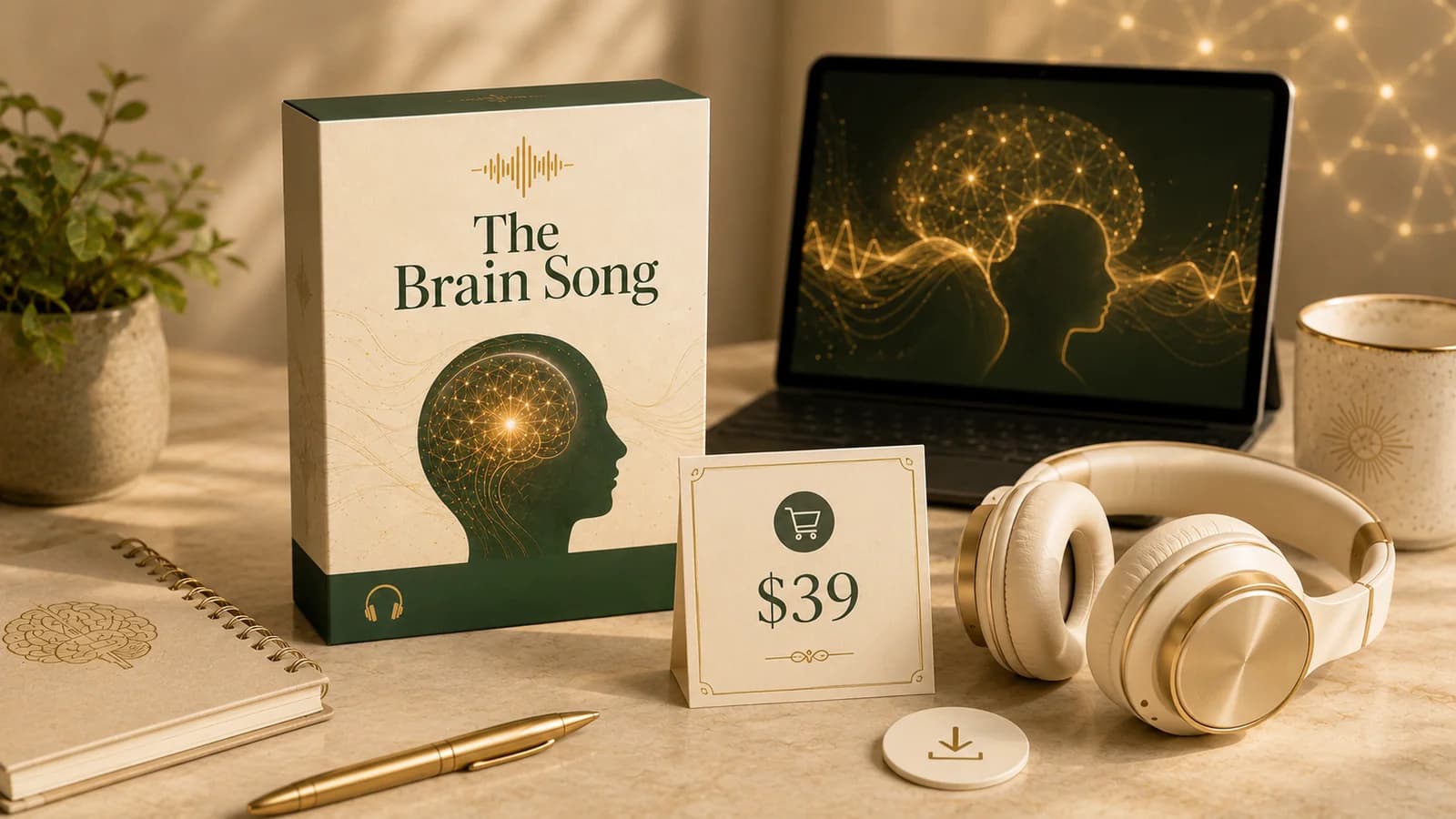
Where To Buy
$37
The Brain Song is sold exclusively through the official ClickBank page. As of this review, the one-time price is $37, though the sales page occasionally runs limited-time discounts dropping it to $27 or bundling extra bonuses.
You get instant access to the main audio track, all bonus materials, and lifetime updates. There are no hidden recurring charges, no shipping fees, and no upsells inside the members area. The purchase is backed by a 60-day money-back guarantee, which means you can request a full refund within two months if you don't see results.
I recommend buying directly from the official page rather than third-party resellers. ClickBank handles the transaction securely, and purchasing through the official link ensures you qualify for the guarantee and any current promotions. Grab The Brain Song here if you want to lock in the current pricing before it changes.
The 60-day window gives you enough runway to complete two full cycles of the 30-day protocol, which is how long the creator says most people need to notice compounding effects. If you hit day 59 and still feel no different, you can ask for your money back — no questions asked.
The $37 price point puts it in the middle range for digital brain training products. It's cheaper than a month of premium nootropic supplements, which often run $60 to $100 per bottle, but more expensive than simple focus music playlists available on streaming platforms. The lifetime access model means you're not locked into a recurring payment, which is a major advantage if you plan to use the program for several months or return to it periodically.
ClickBank's payment processing accepts all major credit cards, PayPal, and international payment methods. The transaction shows up as "CLKBANK*COM" on your statement, not the product name, which some buyers appreciate for privacy. You receive an email with download links within two minutes of purchase, and the files are yours to keep even if you later request a refund.
One detail worth noting: the sales page sometimes displays countdown timers or "only X spots left" messaging. These are marketing tactics, not real inventory limits, since it's a digital product. The core pricing of $37 has been stable for months, so don't feel pressured by artificial urgency.
Get Best Price →The Brain Song Complaints, Reddit Feedback, And Research
I spent time digging through Reddit threads, ClickBank reviews, and third-party forums to get a sense of what real buyers are saying. The feedback is mixed but leans positive.
One Reddit user on r/Nootropics mentioned trying The Brain Song after years of cycling through different supplement stacks. They said the first week felt like nothing, but by week three they noticed they could recall client names more easily during meetings. They appreciated that it didn't come with the jittery side effects some nootropics caused.
Another user on r/productivity was less impressed. They completed the full 60 days and reported no measurable change in focus or memory. They suspected the placebo effect was driving positive reviews and ultimately requested a refund, which they received without hassle.
The most common complaint across platforms is inconsistency. Some people feel sharper within 10 days, while others finish the two-month window and notice nothing. This lines up with broader research on brainwave entrainment, which shows individual responsiveness varies based on baseline brainwave patterns, age, and how consistently someone uses the program.
A smaller group of buyers mentioned frustration with the sales page, which they felt oversold the speed of results. One person noted they expected dramatic memory improvement within a week based on the marketing language, but the actual experience was more gradual and subtle.
On the positive side, multiple reviewers highlighted the sleep bonus tracks as unexpectedly valuable. Better sleep indirectly supports memory consolidation, so even if the main track didn't produce instant results, improved rest made them feel mentally sharper overall.
There's also some academic support for the core concept. A 2017 study published in Frontiers in Human Neuroscience found that 40 Hz gamma entrainment improved memory performance in healthy adults. Another study from 2015 in Psychological Research showed theta-frequency stimulation enhanced memory retrieval. These aren't studies of The Brain Song specifically, but they validate the mechanism the program is built on.
A user on r/BrainTraining shared a detailed log of their 90-day experience. They tracked daily sessions, noted subjective mood and focus ratings, and tested themselves weekly using free online memory games. Their scores improved by about 15% between week four and week twelve, but they admitted they also started sleeping better and cut back on alcohol during the same period, making it hard to isolate the audio's impact.
Another common thread in buyer feedback is frustration with the lack of objective measurement tools. Several reviewers wanted a way to track their progress beyond subjective feelings — something like a before-and-after cognitive test or brainwave readings. The program doesn't include any assessment tools, so users are left guessing whether subtle improvements are real or imagined.
A few buyers also mentioned technical issues with the MP3 files. One person reported distorted audio when playing the files on an older smartphone, which they solved by switching to a laptop. Another said the files didn't sync properly with their cloud storage service, forcing them to re-download multiple times. These are minor complaints but worth noting if you plan to use the program across multiple devices.
On the research side, a 2019 meta-analysis in Neuroscience & Biobehavioral Reviews examined 22 studies on auditory brainwave entrainment and concluded that gamma stimulation consistently produces EEG changes, but the cognitive benefits depend heavily on the listener's baseline mental state and the specific frequencies used. This supports the idea that The Brain Song works for some people but not everyone.
The Brain Song Alternatives
If The Brain Song doesn't feel like the right fit, here are three alternatives worth considering:
Mind Lab Pro is the go-to if you want a pill-based solution with strong clinical research. It contains 11 nootropic ingredients targeting memory, focus and mental energy. The downside is ongoing cost and the hassle of daily capsules. Each bottle lasts 30 days and costs $69, which adds up to over $800 per year if you stay on it long-term.
BrainHQ offers scientifically validated brain games designed by neuroscientists. It's more interactive than The Brain Song, which some people prefer. The trade-off is that it requires 20-30 minutes of active participation per session. The annual plan at $96 breaks down to $8 per month, making it cheaper than The Brain Song if you only use the audio program for two months before moving on.
Headspace Focus Music provides curated playlists designed to improve concentration, but it doesn't claim to use brainwave entrainment. It's more about ambient soundscapes than targeted frequency work. If you just want pleasant background audio and don't care about the neuroscience angle, it's a cheaper option. The downside is that you need an active subscription to access the content, and it's tied to the Headspace app ecosystem.
Another option worth mentioning is the Muse headband, which costs around $250 upfront. It uses EEG sensors to give you real-time feedback on your brainwave activity during meditation sessions. The advantage is objective measurement and personalized guidance, but the price point and learning curve are much higher than The Brain Song. It's better suited for serious biohackers who want hard data, not casual users looking for a simple daily habit.
If you want a completely free alternative, YouTube has dozens of brainwave entrainment channels offering gamma and theta tracks. The quality varies wildly, and there's no structured program or support, but it's a zero-risk way to test whether you respond to this type of audio stimulation before buying a paid product.
| Product | Price | Format | Best For |
|---|
| The Brain Song | $37 one-time | Digital audio (7 min/day) | People who want passive brain training and dislike supplements |
| Mind Lab Pro | $69/month | Nootropic capsules | Buyers who prefer supplement-based cognitive support with clinical backing |
| BrainHQ (Posit Science) | $14/month or $96/year | Online brain games | Users who enjoy active mental exercises and gamified training |
| Headspace Focus Music | $13/month | Audio playlists | People looking for background focus music without entrainment claims |
Final Verdict On The Brain Song
The Brain Song is a solid pick for adults dealing with mild memory fog who want a low-effort, non-invasive tool to support cognitive function. It won't replace medical treatment for serious conditions, and it won't work for everyone, but the combination of brainwave entrainment science, a reasonable price point, and a no-risk guarantee makes it worth testing.
The biggest selling point is simplicity. Seven minutes per day with headphones is something most people can realistically stick with, especially compared to supplement stacks that require multiple pills timed around meals or brain games that demand 30 minutes of focused effort.
The 60-day money-back guarantee removes most of the risk. If you complete two months of daily listening and feel no different, you get your $37 back. That gives you a fair window to judge whether the subtle improvements some users report — better name recall, fewer "why did I walk into this room" moments, sharper focus during conversations — show up for you.
I'd recommend it if you're in the target demographic: over 40, noticing small memory slips, and looking for something easier than a full cognitive optimization routine. I'd skip it if you need dramatic results fast or if you have a diagnosed condition that requires professional intervention.
The program works best when combined with other brain-health basics. If you're sleeping four hours a night, eating a diet heavy in processed foods, and skipping exercise, seven minutes of audio won't override those bigger problems. But if you're already doing the fundamentals and want an extra edge, this is a practical addition.
If you want to give it a try, check current pricing and grab your copy here while the 60-day guarantee is still active. The worst-case scenario is you spend two months testing it and get your money back. The best case is you find a simple tool that makes daily life a little sharper.
Frequently Asked Questions
How long does it take to see results with The Brain Song?+
Most users report noticing subtle improvements between two and four weeks of daily use. Some people feel mentally sharper within 10 days, while others need the full 60-day window to experience measurable changes. Consistency matters more than duration — missing multiple days per week will slow progress. The creator's recommended protocol is 30 consecutive days for the first round, then you can shift to five days per week for maintenance once you've established a baseline improvement.
Do I need special headphones to use The Brain Song?+
Any decent pair of over-ear or in-ear headphones will work. The binaural beats require stereo sound to deliver different frequencies to each ear, so don't use a single earbud or external speakers. You don't need expensive studio-grade headphones, but avoid cheap earbuds that distort audio quality. Several buyers mentioned using mid-range wireless headphones from brands like Sony or Jabra with good results. If your headphones have active noise cancellation, turn it off during sessions — some users report it interferes with the entrainment effect.
Can I use The Brain Song if I'm already taking nootropic supplements?+
Yes. The audio program works through a completely different mechanism than nootropics, so there's no interaction risk. Many users combine it with supplements like omega-3s, caffeine or racetams without issues. If you're on prescription medication for cognitive conditions, check with your doctor first. One buyer on a Reddit thread mentioned stacking The Brain Song with Mind Lab Pro and reported that the combination produced faster results than either method alone, though that's anecdotal rather than clinically verified.
Is there any science backing brainwave entrainment for memory?+
Multiple peer-reviewed studies show that exposing the brain to specific frequencies can shift brainwave patterns and improve cognitive performance. A 2017 study in Frontiers in Human Neuroscience found gamma entrainment enhanced memory in healthy adults. Research on theta waves shows similar benefits for memory consolidation. The Brain Song itself hasn't been independently studied, but the underlying mechanism has decades of support. A 2019 meta-analysis in Neuroscience & Biobehavioral Reviews concluded that auditory entrainment produces consistent EEG changes, though individual cognitive benefits vary based on baseline mental state and frequency precision.
What happens if The Brain Song doesn't work for me?+
You have 60 days to request a full refund through ClickBank. The process is simple — you contact support, explain that it didn't work, and get your money back. No need to prove you used it daily or provide detailed explanations. The guarantee is designed to let you test the program risk-free. Multiple buyers confirmed in reviews that the refund process took less than 48 hours from request to credit appearing in their account. ClickBank's buyer protection policy is one of the stronger ones in the digital product space.
Can I listen to The Brain Song while working or driving?+
The creator recommends listening in a quiet environment where you can relax and close your eyes for best results. Listening while working or driving isn't dangerous, but it reduces effectiveness because your brain is focused on other tasks instead of entraining to the frequencies. Save it for a dedicated seven-minute window when you can sit still. Some users mentioned listening during their morning coffee or right before bed as easy ways to build the habit. If you absolutely must multitask, the creator suggests pairing it with light stretching or sitting in a parked car before starting your commute.
Does The Brain Song work for younger adults or just people over 40?+
The program is marketed toward adults over 40 experiencing age-related memory decline, but the brainwave entrainment mechanism doesn't have an age restriction. Younger users report benefits too, especially for focus and concentration during study sessions or high-pressure work periods. The difference is that older adults tend to notice more dramatic improvements because they're starting from a lower cognitive baseline. A 25-year-old with sharp memory might not feel much change, while a 55-year-old struggling to remember passwords could see significant gains.
Can I share The Brain Song files with family members?+
Technically, the license is for single-user access, but there's no DRM or technical restriction preventing you from sharing the MP3 files. The creator's position is that each person should purchase their own copy to support ongoing development and updates. From a practical standpoint, if you want your spouse or parent to try it, grabbing a second copy ensures they both get access to future updates and qualify for the 60-day guarantee if it doesn't work for them.

Reviewed by
Neuroscience Researcher & Wellness Writer
After 8 years in neuroscience research, Sarah started WealthBoostDaily to give readers honest, research-aware reviews of brain supplements, manifestation programs, and wealth tools.
View Sarah's full profile →